

Cochem Mosel
Our hometown of Cochem on the Moselle
Cochem, with around 5,000 inhabitants, is the district capital of the Cochem-Zell district and thus the smallest district capital in Germany. This fact often surprises people, as the numerous visitors and tourists, along with the many hotels and shops, make the town seem much larger and more spread out. Cochem was first mentioned in 886, but the area was already settled in Celtic and Roman times. Cochem has held town rights since 1332, a fact of which the residents are still very proud. Until 2009, Cochem was even an independent town with its own administration. Since 2009, it has been part of the Cochem municipality, and there are still quite a few Cochem residents who long for its independence.
In 1932, the previously independent fishing villages of Sehl and Cond were incorporated into Cochem. Today, the border between Sehl and Cochem is only discernible to those in the know, and the district of Cond, on the opposite bank of the Moselle, is connected to the old town by two bridges. Both districts boast historic half-timbered buildings, and a small village center has been preserved to this day. For example, Sehl is home to one of the oldest half-timbered buildings on the entire Moselle, dating back to 1374, and the so-called Sehl Cathedral, built in 1493.
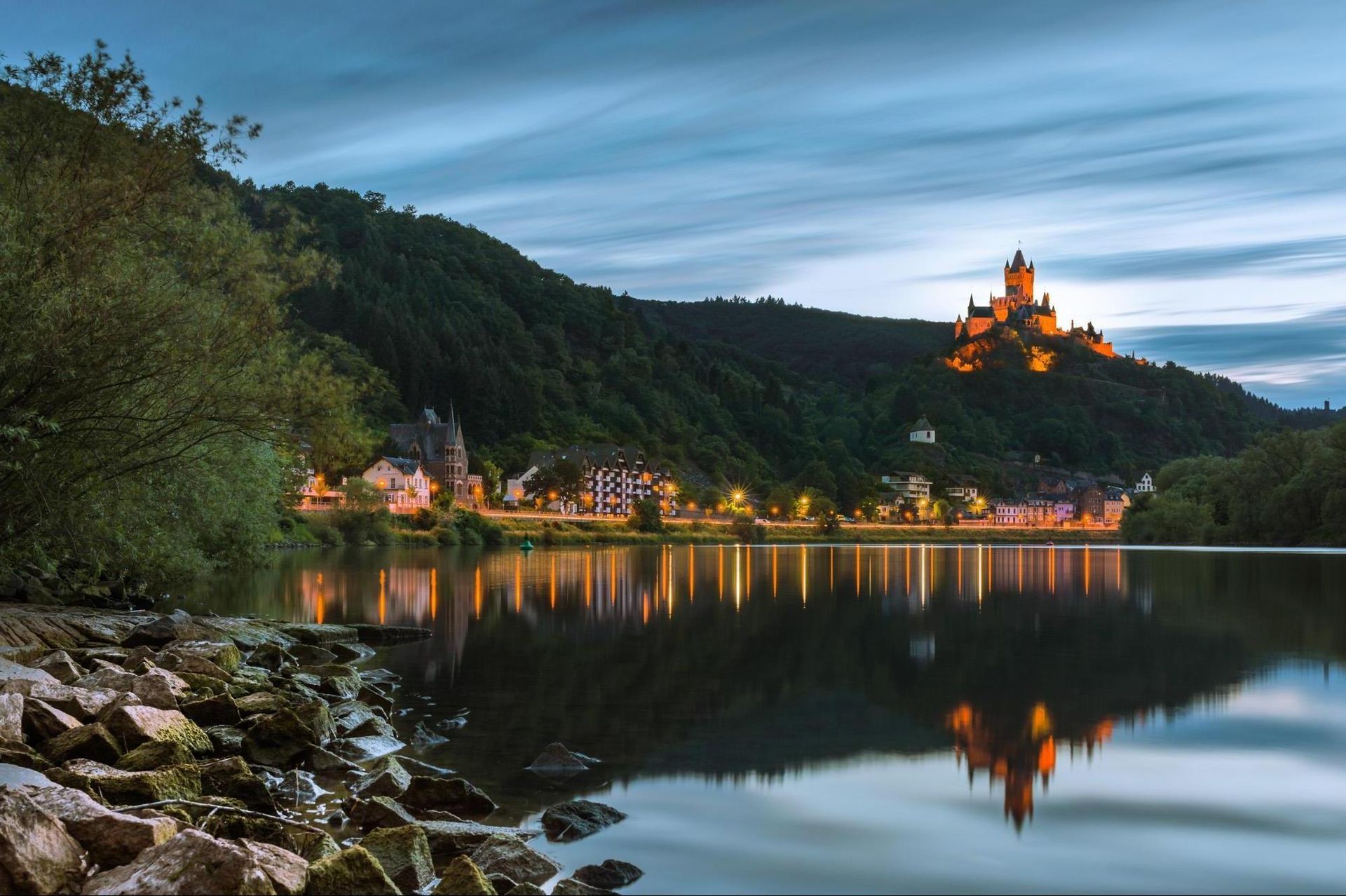
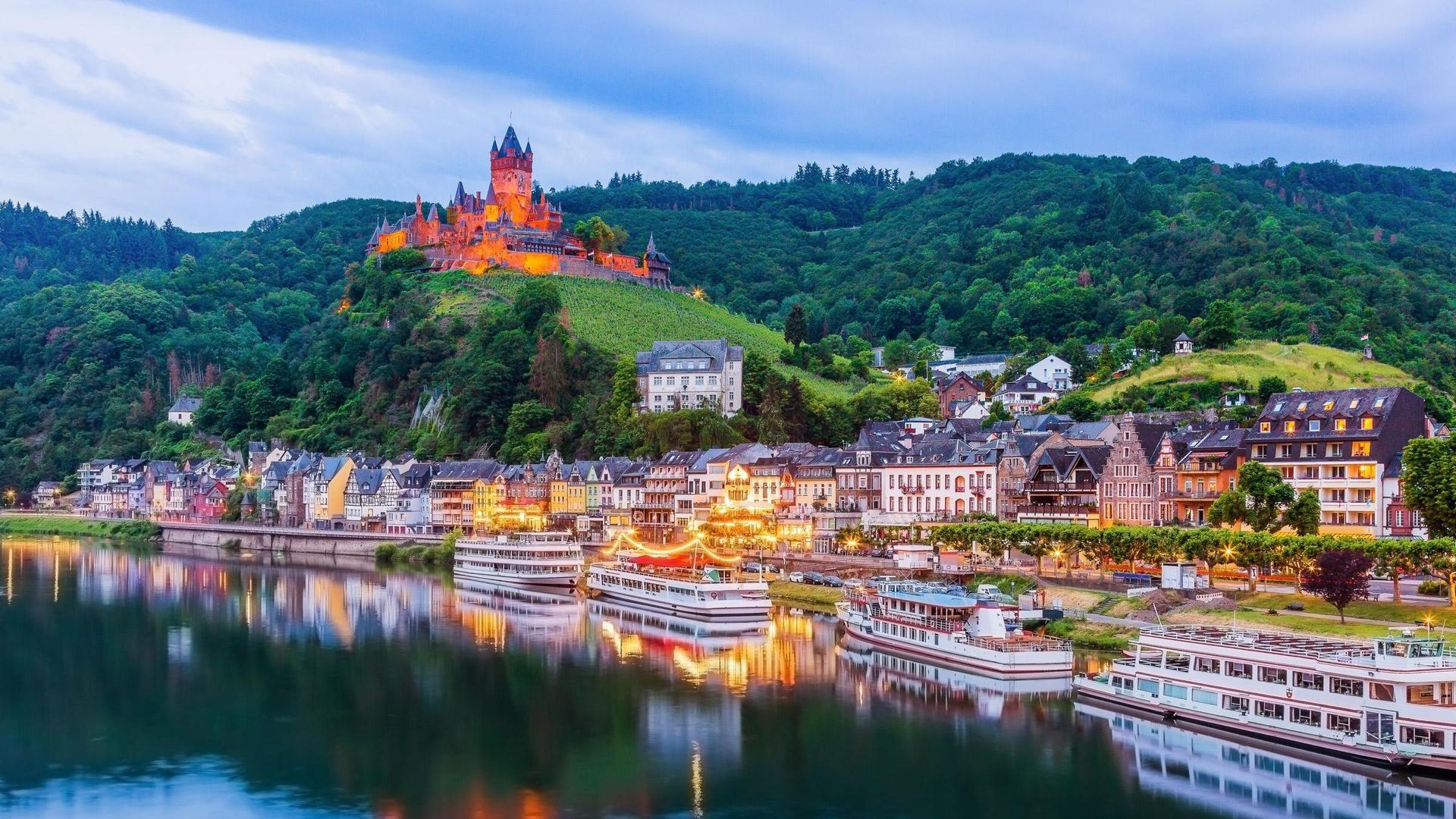
Cochem as a whole is characterized by tourism and viticulture. The townscape is dominated by the majestic Reichsburg Cochem, perched on a conical hill high above the Moselle River. The numerous hotels, guesthouses, inns, restaurants, and street cafés accommodate vacationers from all over the world. Nevertheless, finding available accommodation can sometimes be challenging during peak season and on weekends. The beautiful Moselle promenade, stretching for several kilometers, invites visitors to stroll, walk, and cycle. A few small yachts are moored in the harbor, and the many river cruise ships that anchor there create an almost Mediterranean atmosphere.
Sights in Cochem
Cochem Castle
The imperial castle was first documented in 1130 and occupied by French troops of King Louis XIV in 1688. These troops destroyed it in 1689 during the War of the Palatine Succession. It was not until 1868 that it was rebuilt by the Berlin merchant Louis Fréderic Jacques Ravené according to the original plans.
Winneburg Castle Ruins: Winneburg Castle was first documented in 1304. In the following years, it was continuously expanded but remained in the possession of the Lords of Winneburg. After this line died out in 1637, the castle passed into the hands of the Metternich family in the mid-17th century. Winneburg Castle was also captured and blown up by French troops in 1689. It was never rebuilt and remained a ruin. In 1832, the famous Prince Metternich purchased the castle ruins. Unfortunately, it was never rebuilt. Since 1932, it has belonged to the town of Cochem. Today, it is part of the Moselsteig hiking trail and remains a worthwhile destination for hikers.
The Cochem town hall on the market square and the St. Martin's fountain
The Baroque-style town hall is a former electoral administrative building that was destroyed by fire at the end of the 17th century and rebuilt and expanded at the beginning of the 18th century.
In front of the town hall on the market square stands the market fountain, first mentioned in 1459, which probably already bore a statue of Saint Martin at that time.
The Catholic Church of St. Martin
The chronicle mentions a St. Martin's Church as early as 1130; a second is mentioned around 1456. The "Old Choir" of the present church dates from this period and is its oldest part, having survived the Second World War. The church in Cochem, rather simple from the outside, surprises visitors with its many beautiful stained-glass windows inside. These were designed by the London glass artists Graham Jones and Patrick Reyntiens. The Oberlinger organ in St. Martin's Church in Cochem is also a noteworthy feature of the church's architecture.
The Capuchin Monastery
From the market square, old, winding stone steps lead up to the monastery hill. The Capuchin monastery, founded around 1623 and situated on a promontory, remained a monastery until 1802 and is now the city's cultural center.
The city gates and the old city wall
The city gates of Cochem and parts of the preserved city wall are well worth seeing.
The Martinstor (Martin's Gate) was built in 1352 by Elector Baldwin of Luxembourg, who was also Archbishop of Trier. The popular name for the city gate, "Mäuschesportz," indicates its former use as a toll or customs gate. A toll chain (Haspel) was laid between the imperial castle and the opposite bank of the Moselle River. This allowed ships to be stopped and the payment of tolls enforced.
The Endert Gate
The gate was erected in 1332 by Elector Baldwin. It served as the northern gateway in the city wall. The Endert Gate protected the city from attacks from the Endert Valley. It was very well known among travelers, as passengers of the stagecoaches to Cologne and Frankfurt gathered here or in front of the adjacent gate tavern before departure.
The Enderttor gate also served as Cochem's city prison for a time.
The gate is still completely intact. The gatekeeper's cottage also still exists. Today it is located in the city's busy pedestrian zone.
Das Balduinstor
The narrow, stepped alleyways along the old city wall on Klosterberg are also romantic. From the Balduinstor gate, there's a fantastic view of Cochem Castle.
The Foxhole
In Cochem, it's easy to overlook the so-called "Foxhole," a passageway tucked away in a corner of the dense development between two hotels. Yet, venturing through it is particularly charming. From the Moselle promenade, the "Foxhole"—a gateway that was once Cochem's smallest city gate—leads into the pedestrian zone towards the Balduin Gate.
Wine hikes around Cochem
Calmont via ferrata
Climb the steepest vineyard in Europe. Experience firsthand what steep-slope viticulture means. The path leads past striking rock spurs via ladders. Steel cables provide support as you traverse a rocky ridge. Reward yourself with magnificent views of the villages of Bremm and Ediger-Eller, and the Stuben monastery ruins nestled in one of the most beautiful bends of the Moselle River. The sometimes alpine-like terrain, reaching up to 300 meters above the Moselle and traversing Europe's steepest vineyards, presents a real challenge even for experienced hikers.
The Moselsteig
The Moselsteig trail connects the "highlights of the Moselle" – a total of 365 kilometers of trail divided into 22 very different stages between Perl on the Upper Moselle and the Deutsches Eck (German Corner) in Koblenz. In the "Ferienland Cochem" holiday region, the Moselsteig runs from Neef to Ediger-Eller (11.0 km), Ediger-Eller to Beilstein (18.0 km), Beilstein to Cochem (14.0 km), Cochem to Treis-Karden (23.5 km), and Treis-Karden to Moselkern (12.5 km).
The Cochem Knights' Round
A vibrant adventure trip amidst stunning scenery, two imposing castles, breathtaking panoramic views, and the slate cliffs so typical of the Moselle region. This harmonious and impressive day hike, while demanding due to its length and terrain, requires sure-footedness and a reasonable level of fitness. However, because of its figure-eight shape, intersecting at the chairlift, this tour can easily be divided into two loops: a "Winneburg Loop" and a "Reichsburg Loop."
Wine hike with wine tasting
Hiking through the wine region
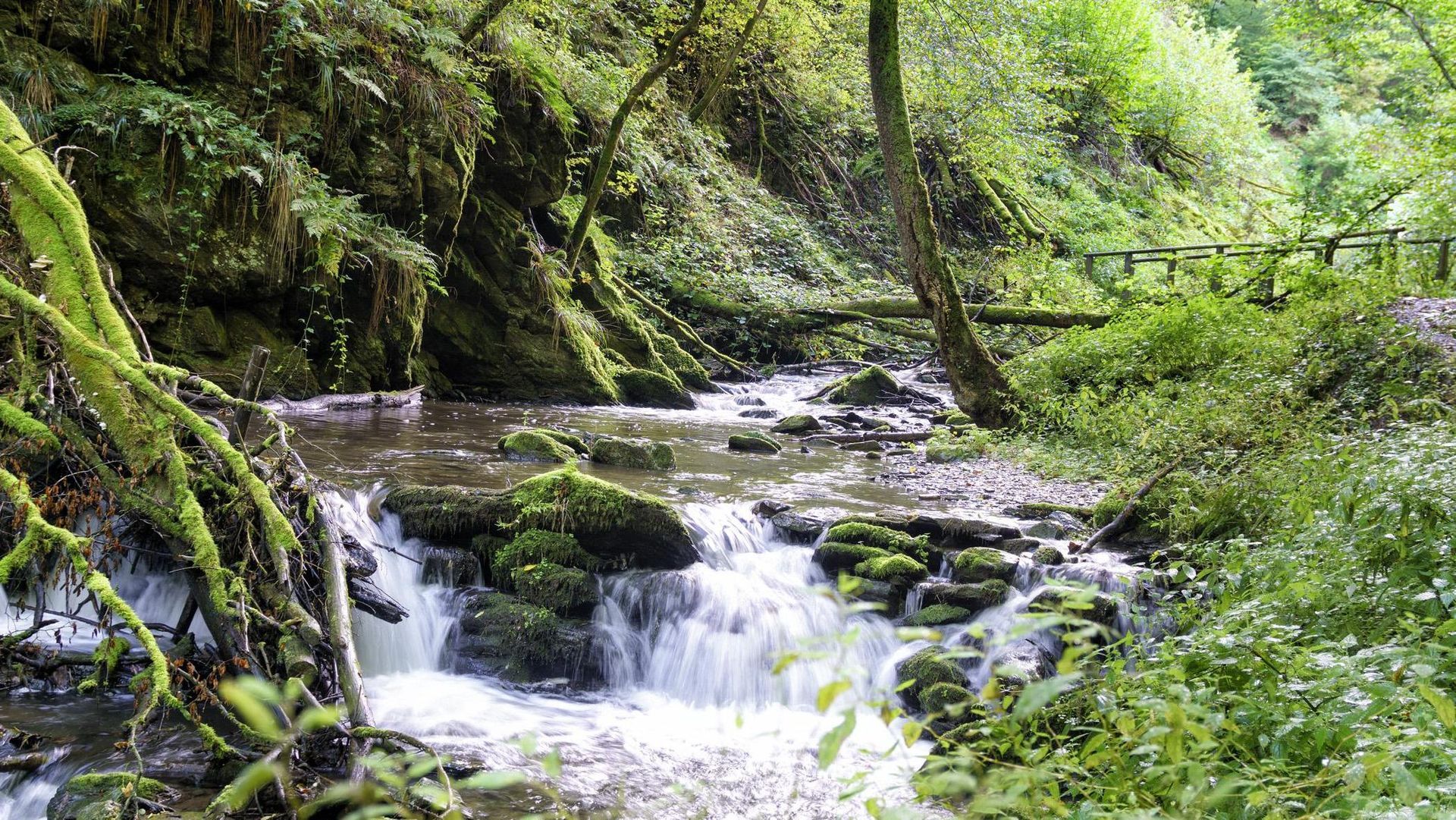
Hiking is possible on the Moselle Heights Trail above the river, or through the vineyards, or directly along the Moselle. Eighteen themed hiking trails alone, part of the Moselle Experience Route, offer a variety of explorations into topics such as wine, archaeology, flora and fauna, religion, art, and literature. Linear and circular hikes between 3 and 15 kilometers are available. These guided hikes typically include a wine tasting – either amidst the vineyards or at a local winery. There, you'll also learn fascinating and interesting facts about wine and the cultural landscape of the Moselle.
Wine experience hike with the winemaker
Every Saturday at 10:30 am
Guided hike through the "Cochemer Klostergarten" vineyard and expert wine tasting at the winery with a traditional vintner's snack. The hike starts at the winery at Brausestraße 1 in Cochem-Sehl, very close to our hotel. After a welcome from the young winemaker, the trail leads through the grounds of the venerable Ebernach Monastery. During a tour of the "Cochemer Klostergarten" vineyard, wine enthusiasts will learn about the winemaker's work in the vineyard. Of course, a glass of wine in the vineyard is included.
After approximately one hour and a hike of about 3 km, you will arrive back at the winery. There, you will visit and expertly explain the old vaulted cellar with its wooden barrels, the wine press, and the bottle storage. Afterwards, in the vintner's house, which houses the traditional Cochem wine tavern, participants can look forward to a professional wine tasting (6 samples) and a hearty snack.
Sights around Cochem
Eltz Castle
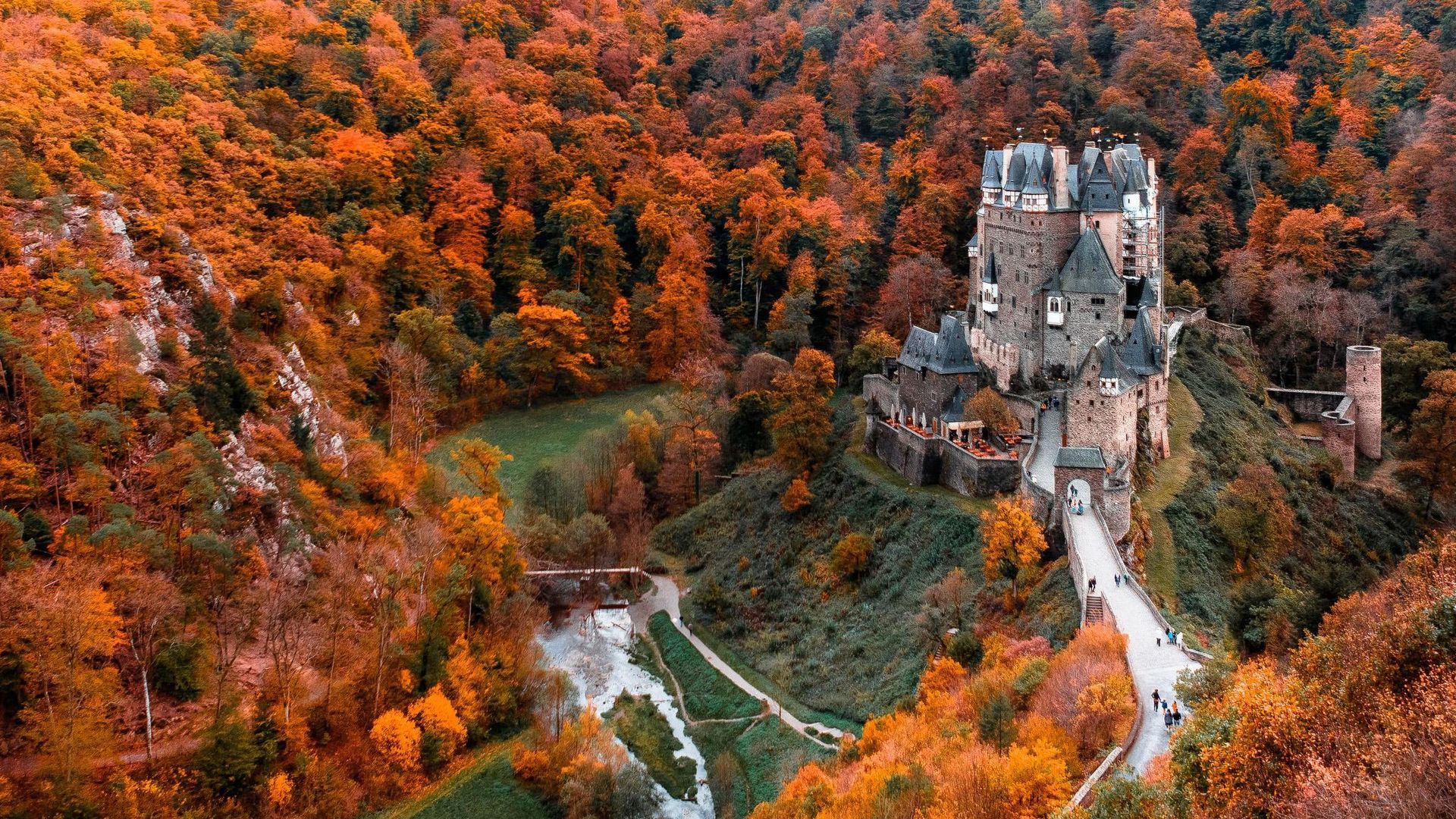
In the romantic Elzbach valley, near Moselkern and Treis-Karden, lies the Sleeping Beauty castle of the Moselle region, Eltz Castle, one of the most beautiful original castles in Germany.
The Martberg - Gallo-Roman temple complex
The Martberg near Pommern – about 180 meters above the Moselle River – was an important cult site in Celtic and Roman times. At the height of this cult site (around 200 AD), numerous temples stood here. One of these temples was dedicated to the Roman god Mars and still gives the hill its name: mons martis – Martberg. A magical place for Celtic and Roman gods, vividly reconstructed on a high plateau above the Moselle.
Historic mustard mill Cochem
Experience, under expert guidance, how the finest cold-ground gourmet mustard is once again produced at one of the oldest mustard mills – dating back to 1810.
Stuben Monastery Ruins
The Stuben monastery ruins impressively testify to a large nunnery that was built opposite the Calmont in the 12th century.
Today, only the ruins of the monastery church, built in 1685/87, are visible; these serve as a cultural forum, and the music events in the Stuben monastery ruins are highly recommended.
The Cochem chairlift and the Pinnerkreuz
High atop Pinnerberg, easily accessible via the Cochem chairlift, stands the Pinnerkreuz, a viewpoint offering a magnificent panorama of the Moselle Valley. The name derives from a shepherd who, attempting to save one of his stray animals from falling to its death, perished in the process. The cross was erected in his memory.
Guided city tours of Cochem - bookable via the tourist information office
Guided tour of Cochem
Traditional guided tour of Cochem. Get to know Cochem and its historical sites.
Guided tour with the Cochem night watchman
Join the Cochem night watchman as he makes his rounds through the old town of Cochem in the evening, carrying his lantern, horn and halberd.
Following in the footsteps of the Capuchins
Join us for this exceptional guided tour through the historic walls of Cochem and experience the unique features of the former Capuchin monastery, which can only be visited as part of this tour. Construction of the monastery began in 1625, and it is one of the most important Baroque religious buildings on the Moselle. Following extensive renovations and conversions, the complex has been used as the "Capuchin Monastery Cultural Center" since 2008 for cultural, private, and public events. Learn fascinating facts about the lives of the Capuchins within these historic walls and experience the tour's conclusion in the "Nuns' Garden," a truly unique setting. Enjoy a delicious glass of Moselle wine while taking in the magnificent panoramic views of the vineyards, the town of Cochem, the Moselle River, and Reichsburg Castle.
Boat tours around Cochem
Discover Cochem and the Moselle by boat
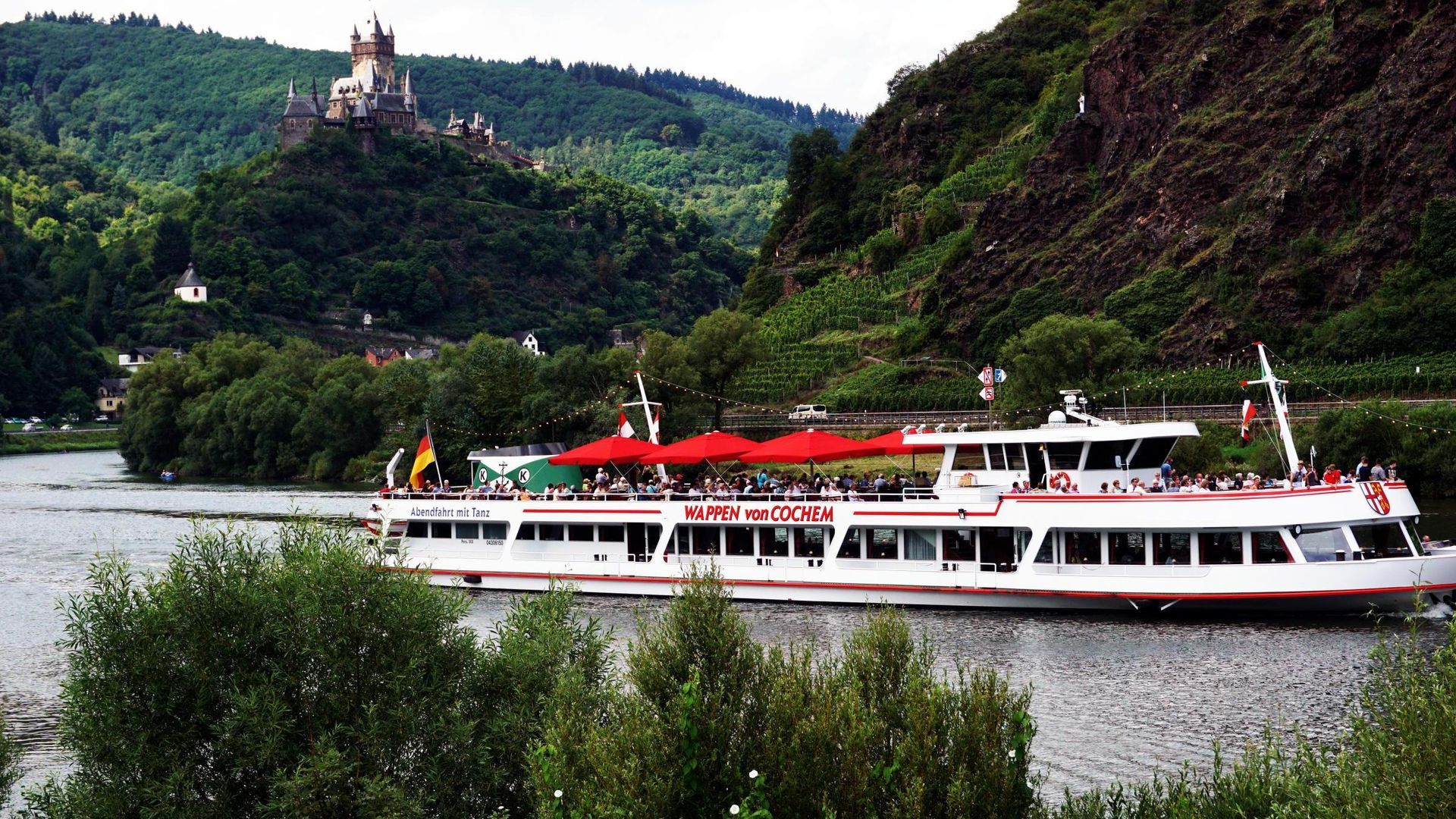
Enjoying and exploring the Moselle Valley from the river is simply a must. Relax and let the beautiful scenery drift by. Historic castles and idyllic wine villages characterize the river valley around Cochem. The lock trip to romantic Beilstein or the journey from Cochem to Traben-Trarbach are particularly popular. Also highly recommended is the combination of a boat tour to Treis-Karden followed by a hike to what is perhaps Germany's most beautiful castle, the enchanting Eltz Castle. For example, take a trip on a modern ship from Cochem to Koblenz on Fridays to the Deutsches Eck (German Corner), where the Moselle flows into the Rhine. Various lock trips, round trips, day trips, and, last but not least, evening cruises with dancing and music are offered in Cochem by the Kolb company and the Köln-Düsseldorfer KD shipping company.
Simply Clever Direct Booking
It couldn't be simpler
- Book directly without a diversion
- More room choice
- Arrangements & offers
- Simple booking process
- Instant confirmation
- Secure payment in advance on request
- Book without credit card
- Attractive prices
Make your reservation already today
| Our website |
Other booking sites |
|
| Free WiFi | ||
| Best price guaranteed | ||
| Special packages | ||
| Current offers |